Articulating vs. telescopic
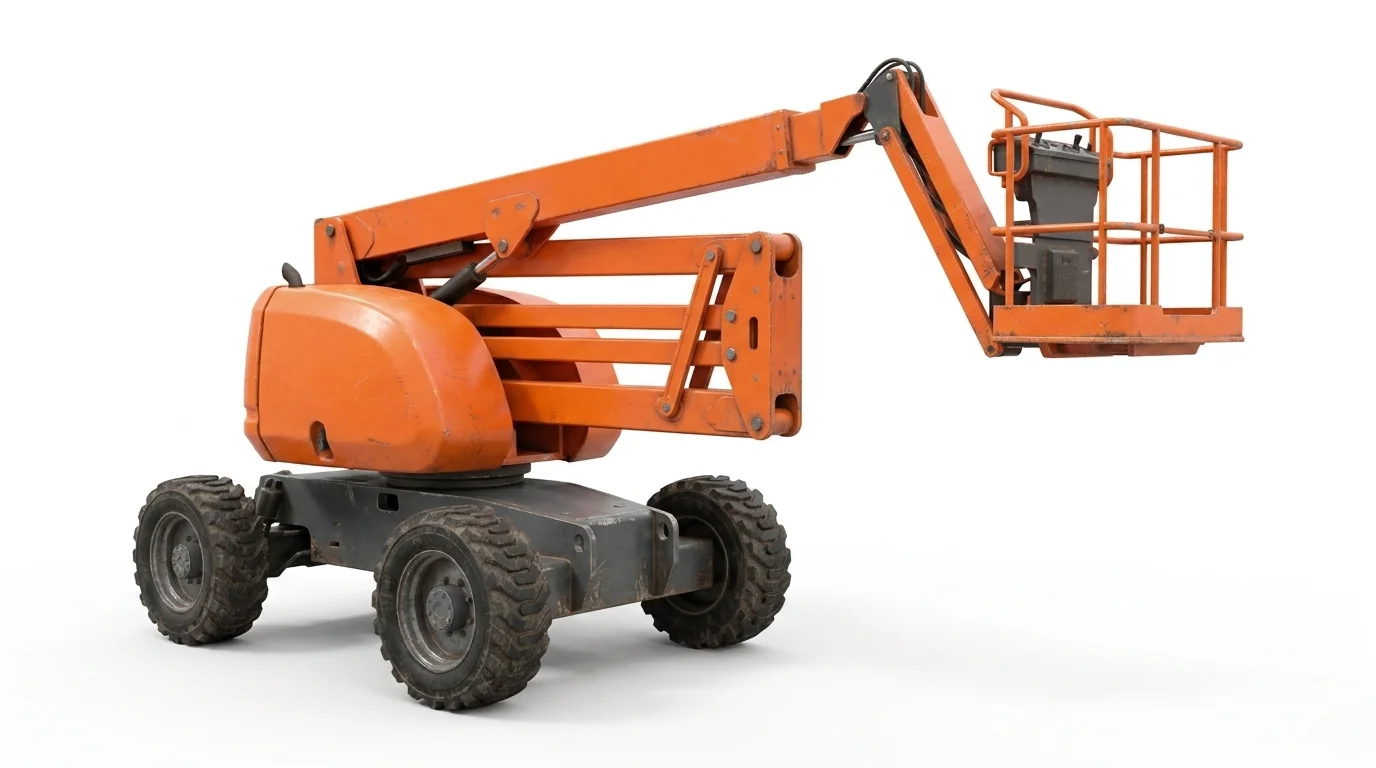
- Articulating booms use multiple joints to reach over and around equipment lines, roof edges, and façade projections—common in logistics and terminal work.
- Telescopic (straight) booms extend directly for long outreach from a clear staging area—useful when you can park on reliable ground away from the structure.
Local terrain and climate considerations
- Outdoor sites across the valley can be cold, slick, or uneven. Tire selection, ground clearance, and allowable slope determine where the machine can be positioned; the unit’s instructions and site procedures govern actual setup.
- Near the foothills, approach and cross‑slopes may limit how close you can stage a machine. Telescopic models can reach from flatter pads; articulating models help when you must weave around obstacles from a closer, leveled spot.
Height, outreach, and tail swing
- Define the horizontal offset you must clear, not just the top height. Booms are chosen for outreach as much as elevation.
- Check tail swing and counterweight clearance for staging near traffic lanes, docks, or utilities. Articulating models often provide tighter working envelopes in congested areas.
Typical Salt Lake City applications
- Exterior envelope work on commercial buildings where setbacks and canopies block vertical access.
- Airside and landside maintenance that needs outreach from clear pads without interrupting ground traffic.
- Retrofit projects in active logistics facilities with conveyors and racking that prevent parking directly below the work.
Related pages
For vertical access on smooth floors, see /electric-scissor-lift-rental/. For exterior vertical work on unfinished ground, review /rough-terrain-scissor-lift-rental/. A broader overview lives at /aerial-lift-rental/.